


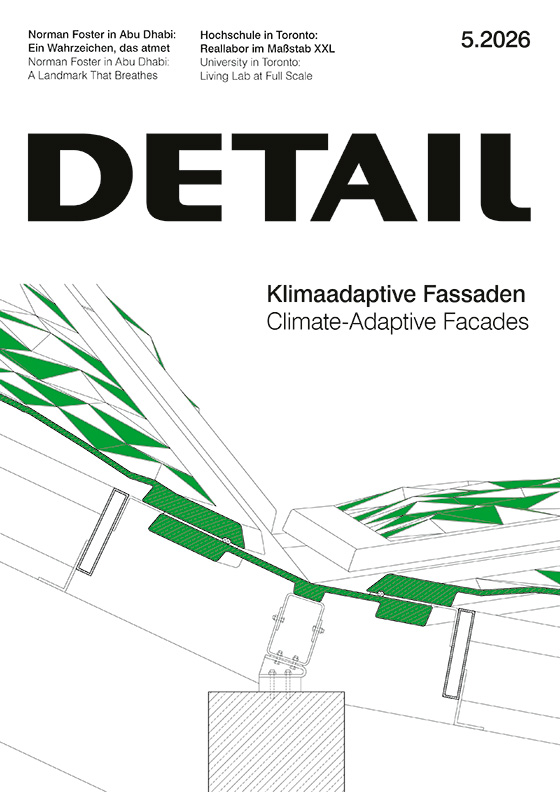
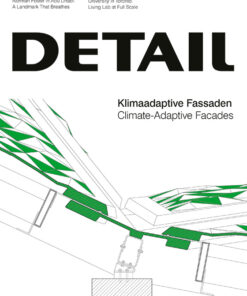
DETAIL 5.2026: Climate-Adaptive Facades
Izvorna cijena bila je: 29.00 €.26.10 €Trenutna cijena je: 26.10 €. uklj. PDV
Po narudžbi 1 tjedan: rok dostave 7 dana.
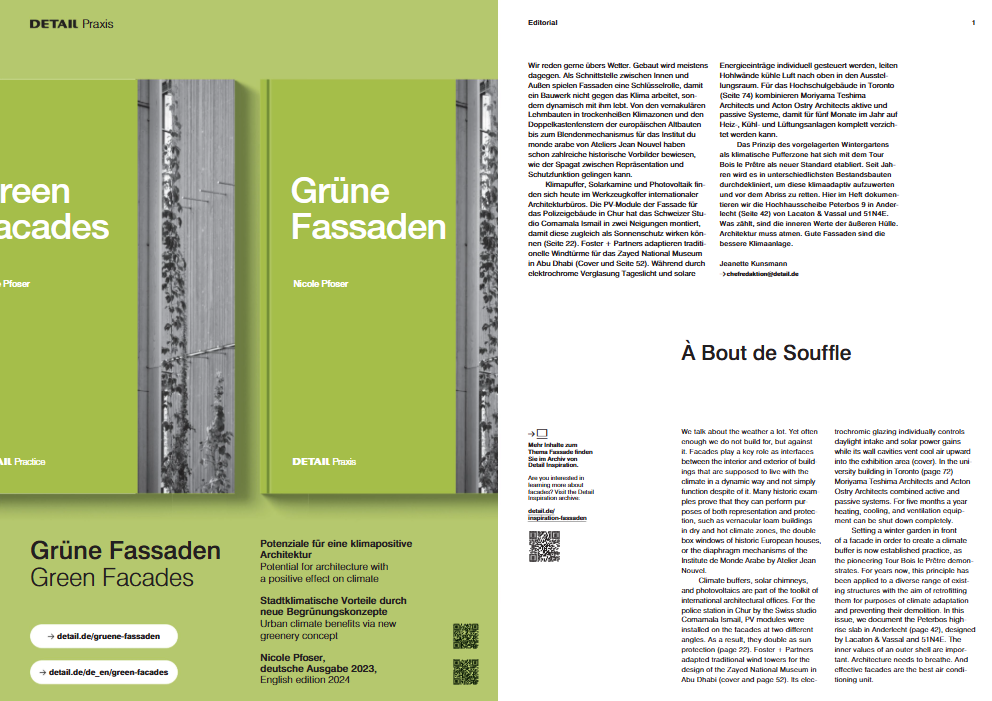
À Bout de Souffle
Facades play a key role as interfaces between the interior and exterior of build¬ings that are supposed to live with the climate in a dynamic way and not simply function despite of it. Many historic exam¬ples prove that they can perform purposes of both representation and protection, such as vernacular loam buildings in dry and hot climate zones, the double box windows of historic European houses, or the diaphragm mechanisms of the Institute de Monde Arabe by Atelier Jean Nouvel.
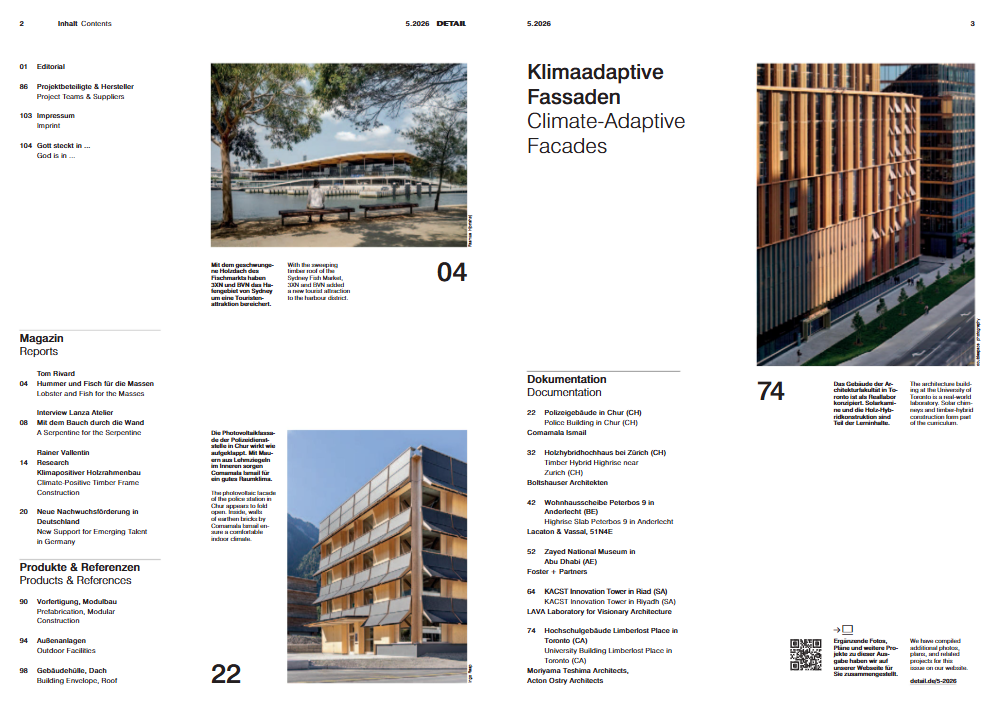
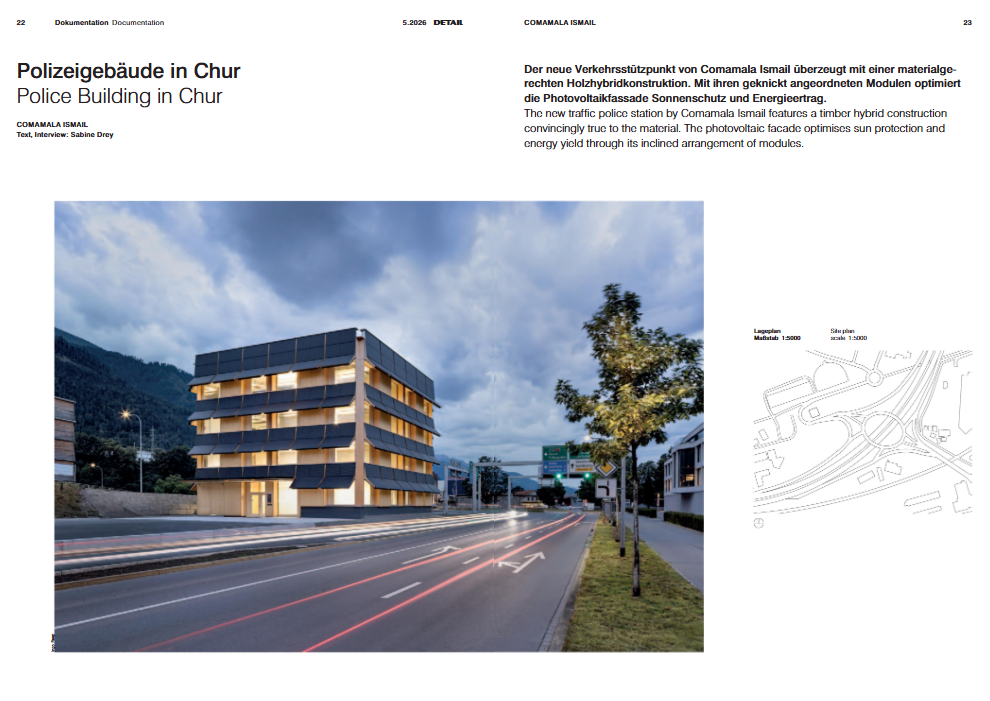
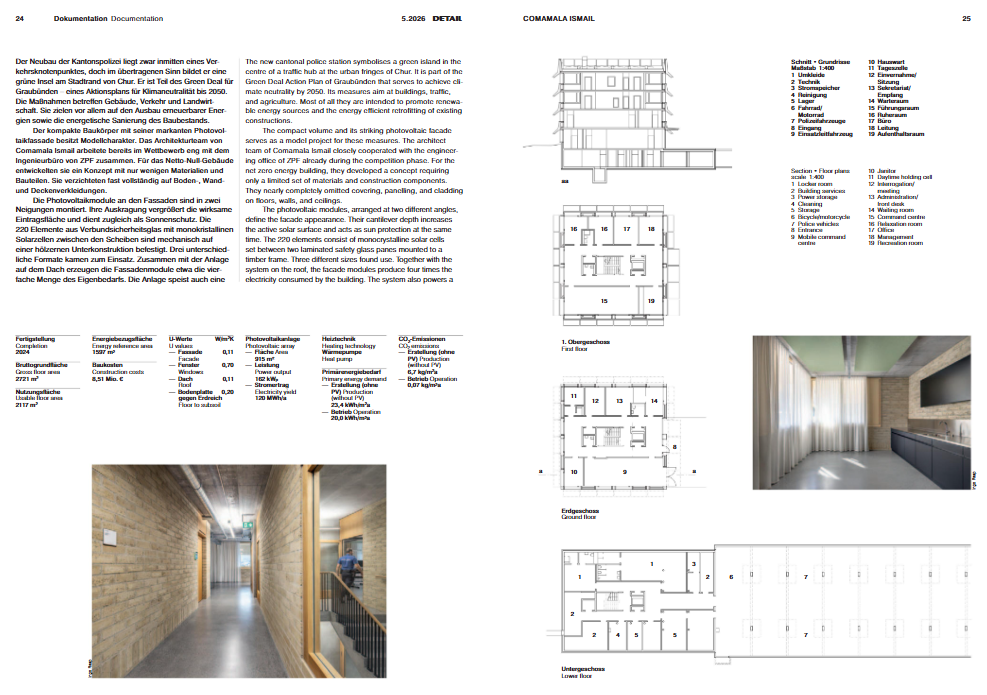
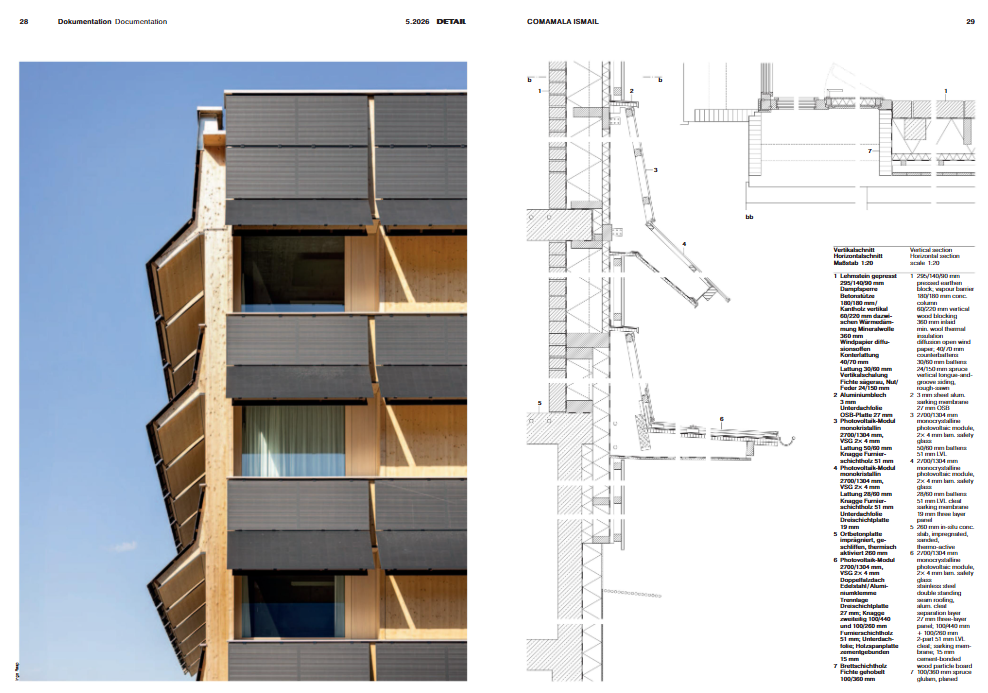
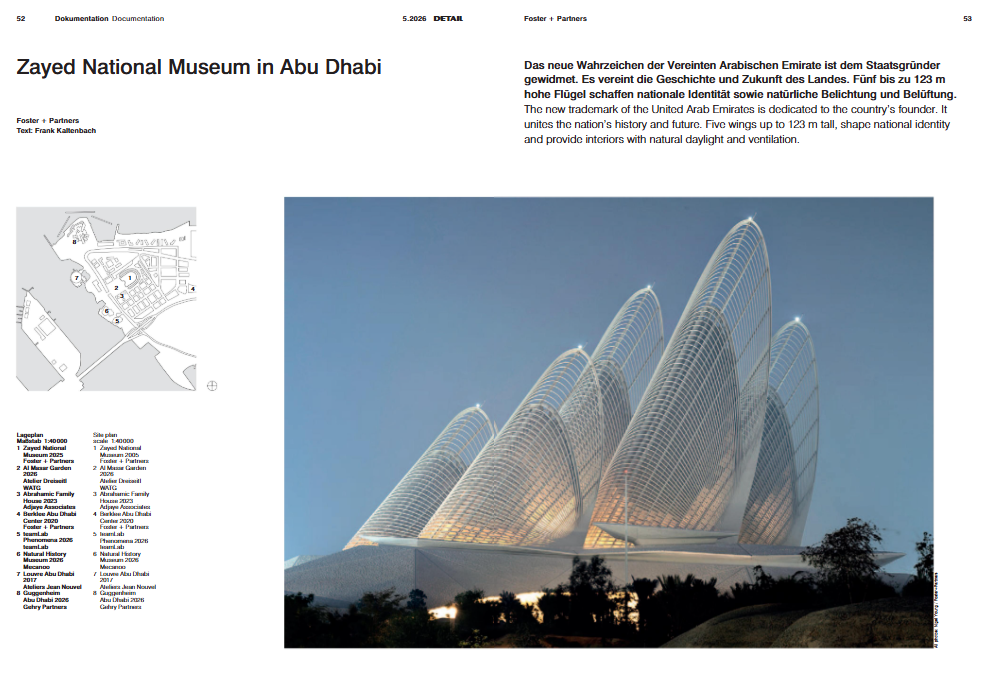
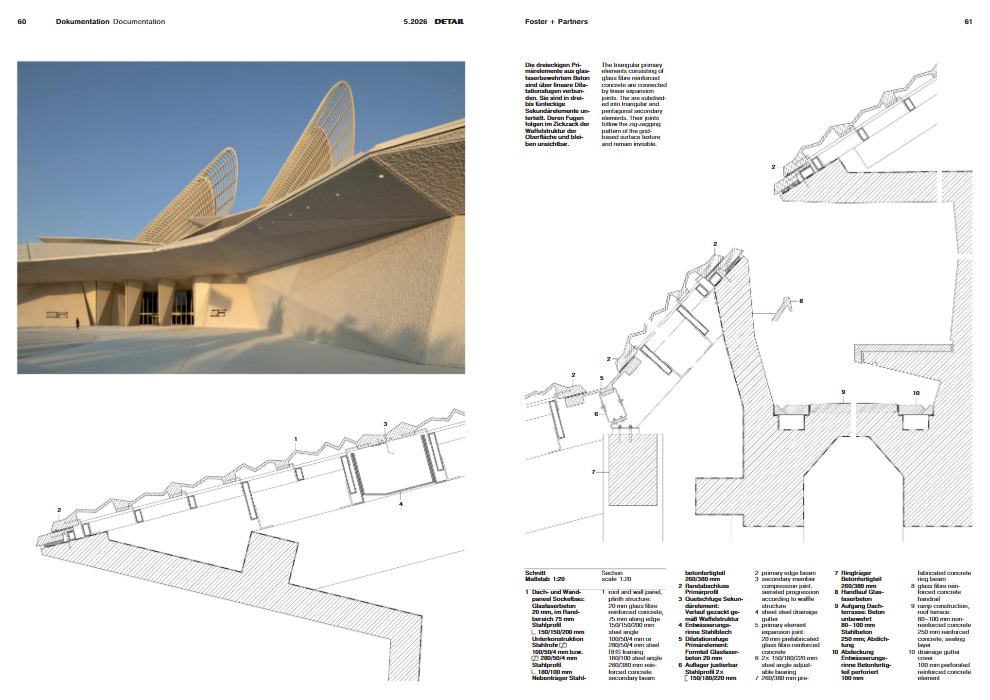
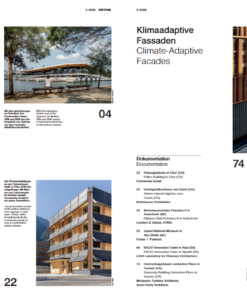
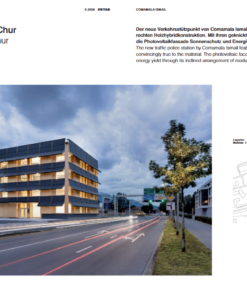
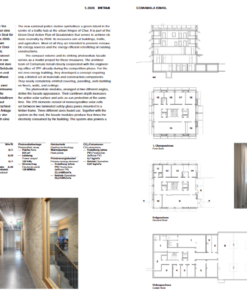
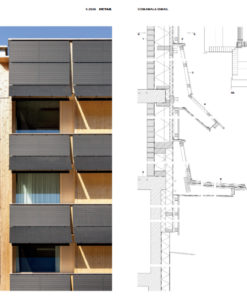
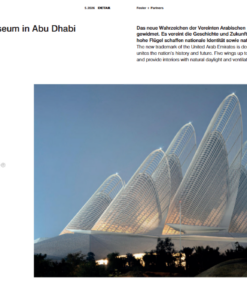
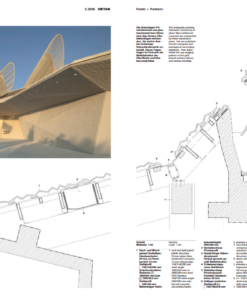
Climate buffers, solar chimneys, and photovoltaics are part of the toolkit of international architectural offices. For the police station in Chur by the Swiss studio Comamala Ismail, PV modules were installed on the facades at two different angles. As a result, they double as sun protection. Foster + Partners adapted traditional wind towers for the design of the Zayed National Museum in Abu Dhabi. Its elec¬trochromic glazing individually controls daylight intake and solar power gains while its wall cavities vent cool air upward into the exhibition area. In the uni¬versity building in Toronto Moriyama Teshima Architects and Acton Ostry Architects combined active and passive systems. For five months a year heating, cooling, and ventilation equip¬ment can be shut down completely.
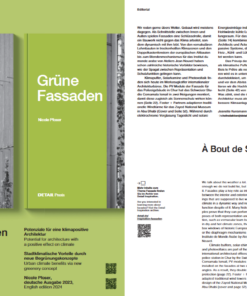
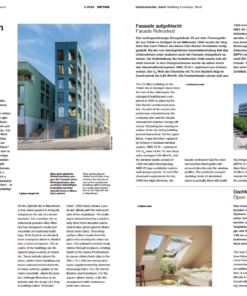
Setting a winter garden in front of a facade in order to create a climate buffer is now established practice, as the pioneering Tour Bois le Prêtre demonstrates. For years now, this principle has been applied to a diverse range of exist¬ing structures with the aim of retrofitting them for purposes of climate adaptation and preventing their demolition. In this issue, we document the Peterbos highrise slab in Anderlecht, designed by Lacaton & Vassal and 51N4E. The inner values of an outer shell are important. Architecture needs to breathe. And effective facades are the best air conditioning unit.
| dimenzije | 21×30 |
|---|---|
| god. izdanja | 2026. |
| izdavač | Detail |
| jezik | engleski, njemački |
| uvez | meki |
Budite prvi koji će recenzirati “DETAIL 5.2026: Climate-Adaptive Facades”
Morate biti prijavljeni da biste objavili recenziju.
Povezani proizvodi




Recenzije
Još nema recenzija.